
Top 16 Squat Variations for Power, Strength, and Mobility

Key Lessons
- Squats come in all shapes and forms—and each type does something a little different for your body.
- Some push your strength higher, others unlock more mobility, and a few ramp up your balance or athleticism.
- If you're just starting out, stick with bodyweight squats before reaching for any weights.
- Once you feel comfortable, experiment with new squat variations
- Take goblet squats, for example. They’re perfect for newbies. You get to focus on the basics—proper form, solid mechanics—without the stress of a heavy barbell.
A good leg workout needs variety. Relying on just one squat—over and over—gets boring, and your body adapts, so you stop seeing results. Some squat variations hit your stability, others build sheer strength, and a handful stretch you out for a better range of motion.
That’s why it’s smart to rotate through several types instead of sticking to one all year. Whether you want bigger legs, smoother movement, or smarter training, picking the right squat matters. Even a small tweak can make a big difference. In this blog, we’ll show you 16 top squat variations, who should use them, and when each one fits best in your routine.
Top 16 Squat Variations That Build Stronger Legs
Not every squat variation serves the same purpose. Some improve control. Some people build strength or the ability to move. Switching your squat variations also prevents overuse and makes training fun.
Here are the top 16 squat variations to try today:
1. Bodyweight Squats Build The Perfect Foundation
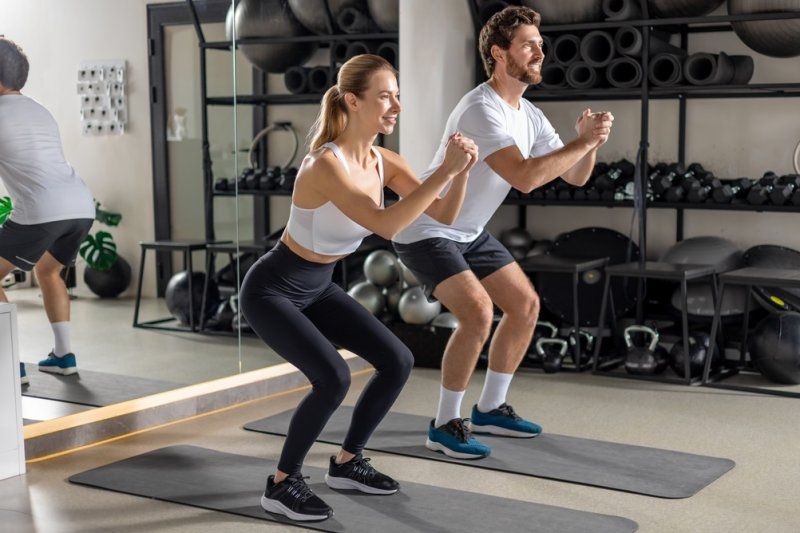
Every serious training program should begin with bodyweight squats. They teach balance, posture, hip movement, plus control before external weight enters the picture. Many people rush into heavy lifting. Bad idea.
Good bodyweight squats strengthen movement quality first. They also expose mobility limitations around the hips, knees, or ankles. For beginners, they remain one of the safest squat exercises for building confidence before progressing into a heavier leg workout.
2. Goblet Squat Improves Technique Quickly
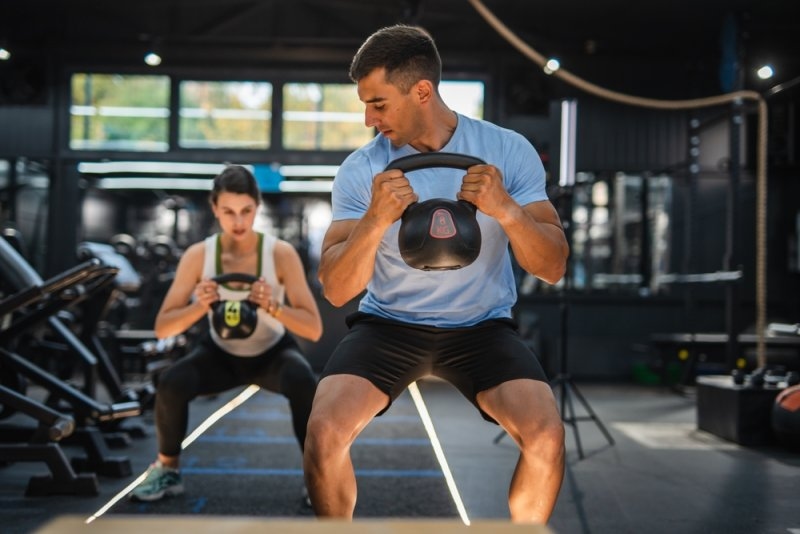
The goblet squat is often recommended because it naturally encourages an upright torso. This will help you form a better posture, and the dumbbell will be easier to get to the bottom of when held close to your chest. The goblet squat also teaches proper bracing without overwhelming beginners.
For many lifters, this becomes the bridge between bodyweight squats and heavy barbell squat exercises. It deserves a regular place in almost every lower body workout.
3. Back Squat Builds Maximum Strength
Among all squat variations, few match the back squat for overall strength development. It loads the hips, glutes, quadriceps, hamstrings, plus core together. Because heavier weights are possible, it remains a staple for athletes and experienced lifters.
Back squats should not replace every other movement, though. Combining a variety of squats will typically yield a more consistent outcome than even doing the same squat over an extended period of time.
Don't Miss: What is HYROX & Why is it the Ultimate Fitness Challenge?
4. Front Squat Targets The Quads More
Front squats take the weight forward, and that means that the body is forced into a better position. Both require better ankle mobility and core stability as compared to back squats.
Front squats are also useful for those who would like to minimize the loading of the spine, while still getting a good leg pump, thanks to the squat.
5. Sumo Squat Changes Muscle Emphasis
Changing foot position changes muscle recruitment. A wider stance increases inner thigh involvement while still challenging the glutes, quadriceps, plus hips. Sumo remains one of the easier squat variations for people who struggle with hip mobility.
Adding dumbbells makes this variation even more useful in a balanced lower body workout.
6. Bulgarian Split Squat Fixes Strength Imbalances
Few squat exercises feel as challenging as the Bulgarian split squat. Single-leg exercises reveal the weaknesses that are discovered during two-legged exercises. Balance improves. Stability increases. The leg strength is increased to become even stronger.
This is a great motion that is especially complementary to bodyweight squat changes of direction in warm-ups before adding weight or resistance to the exercise.
7. Overhead Squat Challenges Mobility
The overhead squat is less about lifting heavy. Instead, it tests shoulder mobility, thoracic extension, ankle flexibility, plus full-body coordination simultaneously. Even experienced lifters often struggle here.
That difficulty makes it valuable. If mobility is limiting other squat variations, practicing overhead squats carefully can improve movement quality across many other squat exercises.
Suggested Reading: Cycling for Body and Mind: Physical, Mental Health Benefits
8. Box Squat Develops Explosive Power
Box squats help build a controlled sitting position, load correctly through the hips, and then power up explosively! Stopping for a moment on the box literally slows momentum, and the muscles have to come up to speed when resting. This variation is frequently used by athletes to emphasize sprinting and/or jumping performance.
It also provides easy positive feedback to the beginners regarding maintaining the squat depth without having to call every rep out.
9. Jump Squat Builds Explosive Speed
Jump squats help to build power and are not a test of strength. The purpose is easy: generate as much force as they can as fast as possible. Softly land on it and reset, then explode again. That matters.
Jump squats are among the most dynamic squat exercises that enhance athletic performance, sprint speed, and vertical jumping capacity. They fit well after bodyweight squats during a warm-up or inside a sports-focused lower body workout.
10. Pistol Squat Tests Balance and Control
The pistol squat demands strength, mobility, coordination, plus patience. Few squat variations challenge all four together. Working on one leg exposes weak hips, tight ankles, or poor balance immediately. Most people need progressions before performing a full repetition.
It isn't essential for everyone, yet mastering it shows excellent lower body control.
11. Zercher Squat Strengthens The Entire Body
Holding the barbell in the crook of the elbows changes everything. The Zercher squat increases upper-back engagement, core stability, plus posture while still delivering a demanding leg workout. Compared to traditional squat exercises, it also teaches staying upright under load.
It feels awkward initially. Then surprisingly effective.
12. Cossack Squat Improves Lateral Mobility
Most squat variations move straight up and down. The Cossack squat moves sideways. That lateral movement improves hip flexibility, adductor strength, plus joint mobility. It also helps athletes who change direction frequently during sports.
When performing Cossack squats with bodyweight squats, it is a good idea to start with a balanced mobility session.
13. Pause Squat Builds Better Control
Sometimes slowing down creates faster progress. Pause squats remove momentum by holding the bottom position for two or three seconds before standing. This has the effect of stability, confidence, and improving the mechanics of movement.
They can be helpful for coaches to use when those who lift are having difficulties performing the squat consistently in other variations.
14. Tempo Squat Increases Time Under Tension
Tempo squats deliberately slow the lowering phase. When you return fighting, take 3-5 seconds to get to the sea floor. Muscles stay under tension longer, and therefore, lighter weights feel extremely heavy.
This variation improves technique while adding challenge without constantly increasing load. It also fits well into almost any lower body workout.
15. Wall Squat Improves Endurance
Wall squats look simple. They rarely feel simple after thirty seconds. Holding a seated position against the wall develops muscular endurance through the quadriceps, glutes, plus calves. Beginners often underestimate it.
As part of recovery days, wall squats complement heavier squat variations without placing extra stress on the joints.
16. Hack Squat Maximizes Quad Development
Whether performed on a machine or with a barbell variation, the hack squat focuses heavily on the quadriceps. Because balance demands are reduced, many people can train close to muscular failure safely.
That makes it an effective addition to any serious leg workout, especially after compound squat exercises. It finishes the session well.
Also Read: Top Fitness Trends Transforming the Active Lifestyle Scene
Conclusion
Your best squat variation really depends on your goal. Looking to power up your strength? Go for back squats. Just starting out? Stick to bodyweight, then move up to goblet squats. Athletes who want speed and power should use explosive moves. People who need more flexibility should try overhead or Cossack squats. There’s no magic squat for everyone—just one that works for you right now.
FAQs
Can squat variations replace deadlifts?
Not really. Different tool, different job. The main distinction between the two exercise types is that squats more target the quadriceps and glutes, while deadlifts more target the hamstrings and lumbar muscles.
Should I wear weightlifting shoes while squatting?
Weightlifting shoes are helpful if you’re lifting heavy or want more stability and depth. But if you’re doing bodyweight or goblet squats, a flat, supportive shoe works just fine.
How often should I change my squat routine?
Most folks see solid progress by changing squat exercises every 6–8 weeks. That doesn’t mean tossing your whole routine—just try a new variation, slow down your tempo, or add weight.
Are squats safe for older adults?
If you’re older, don’t worry—squats are safe. Start with just your bodyweight, master your form, and add difficulty slowly. These shoes give you a stable base and help with mobility, which means you can squat deeper and more safely as you get stronger.
This content was created by AI